15 Amazing Stingless Bee Facts!
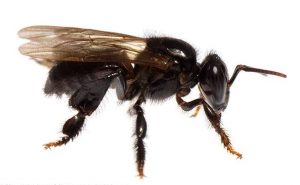
Stingless bees are a large group of bees, comprising the tribe Meliponini (sometimes called stingless honey bees) in the family Apidae. They are closely related to the common honey bees, carpenter bees, orchid bees and bumblebees.
Let’s get ourselves with some Stingless Bee facts. There are many healing and health promoting opportunities for the humans begin with this little busy creature called “BieBee”. As you read the following 15 stingless bee facts, I believe you will be so intrigued by this small BieBee with its extraordinary abilities.
1. Stingless bees has been around for 50 millions of years.
2. Stingless bees store pollen and honey in large egg-shaped pots made of beeswax, typically mixed with various types of plant resin (sometimes called ‘propolis’).
3. Honey is the only food that includes all the substances necessary to sustain life, including enzymes, vitamins, minerals, and water; and it’s the only food that contains “pinocembrin”, an antioxidant associated with improved brain functioning. Stingless bees honey has strong anti-bacterial & anti-toxin function to strengthen our immune system and activation of cells. It is twice as nutritious from the ordinary honey.It is a “Super food” and the best “multivitamins”.
4. Stingless bees have exceptional olfactory abilities include kin recognition signals, social communication within the hive and odor recognition for finding food. Their sense of smell is so precise that it could differentiate hundreds of different floral varieties and tell whether a flower carried pollen or nectar from metres away.
5. Stingless bees fall in the classification of insects with six legs. Stingless bees have five eyes; three tiny ocelli eyes and two compound eyes.The Stingless bees have four stages of life, Eggs, Larvae, Pupae and Full grown Bee.
6. The average worker bee produces about 1/12th teaspoon of honey in their lifetime.
7. It takes one ounce of honey to fuel a bee’s flight around the world
8. Stingless bees visit 50 to 100 flowers during a collection trip.
9. The bee’s brain is oval in shape and only about the size of a sesame seed, yet it has remarkable capacity to learn and remember things and is able to make complex calculations on distance traveled and foraging efficiency.
10. A colony of bees can consists anywhere from 300 – 80,000 workers and a queen. Unlike a hive of commercial honeybees, which can produce 75 kilograms of honey a year, a hive of stingless bees produces less than one kilogram. Stingless bees produce a different tasting honey which is a mix of sweet and sour with a hint of lemon. The taste comes from plant resins which the bees use to build their hives and honey pots and varies depending on the flowers and trees visited.
11. The queen bee can live up to 5 years and it’s role is to fill the hive with eggs. She is the busiest in the summer months, when the hive needs to be at its maximum strength, she lays up to 2500 eggs per day. The queen bee has control over whether she lays male or female eggs. If she uses stored sperm to fertilize the egg, the larva that hatches is female. If the egg is left unfertilized, the larva that hatches is male. In other words, female bees inherit genes from their mothers and their fathers while male bees inherit only genes from their mothers.
12. Though the true female stingless bees become automatically workers, stingless bees become workers based on the food they received when they were larvae. Mostly the queen is fed with royal jelly and the workers with pollen.
13. A stingless bees has two stomachs, the first stomach is for eating and the other stomach is specially designed for storing nectar collected from flowers and water, for making it possible to carry it back to the hive.
14. The larvae of the stinging bees are not fed directly like the other bees. Nectar and pollen is placed on the cell, an egg is laid and then the cell is sealed until the adult bee emerges. It emerges just after pupation. The hive can have 300 to over 80,000 workers depending on the species.
15. The dance leading the bees to food is similar to that of the honeybee, but the method by which stingless bees form colonies is quite different. Worker scouts start looking for a new location when the colony is about to divide and once a site has been selected they start bringing materials from the old site to the new one. This may take place over the course of a month before any of the bees leave the colony to start a new one. A colony of stingless bees can contain as many as 80,000 insects at any one time.